What to see in Valle Maira
A Renaissance fresco cycle at 1,700 metres, 194 stone hamlets, painted sundials and the memory of the cavié: the valley to look at, not only to walk.
The Hans Clemer frescoes at Elva
In the presbytery and apse of the parish church of Santa Maria Assunta at Elva is one of the most remarkable cycles of Renaissance frescoes in the western Alps, attributed to Hans Clemer and dated 1493: scenes from the life of the Virgin and a Crucifixion.
Clemer was a Flemish painter active in Piedmont between the late 15th and early 16th century, so closely tied to this place that he went down in history as the "Master of Elva". He later worked throughout the Marquisate of Saluzzo. More on the Hans Clemer Wikipedia entry.
Finding a work of this calibre in a hamlet at over 1,700 metres is what makes Elva unique — the same hamlet that hosts the albergo diffuso La Caso d'Elva.
Elva, the village of the cavié
Elva is also known as the village of the "cavié". Until the mid-20th century many of its inhabitants collected women's hair, which was then sold in France and across Europe to make wigs.
It was an itinerant, gruelling trade that took the valley's men far from home for months on end: one of the most singular stories of Alpine emigration, still alive in the community's memory. See also the Elva Wikipedia entry.
194 hamlets, sundials and ovens
The most recognisable face of Valle Maira is its 194 hamlets: clusters of stone and timber houses clinging to the slopes, many beautifully preserved or restored.
Dozens of painted sundials survive on their walls — sun clocks often accompanied by mottoes and decoration — especially numerous at Stroppo and Marmora. Communal ovens, chapels and mills complete the picture: the everyday architecture of an Alpine civilisation.
An Occitan valley
Valle Maira is a land of Occitan culture and language, the lenga d'òc of the Alpine valleys: a living heritage of music, dance, festivals and place names. You meet it in the names of places, on signs and at evenings of traditional music.
It is the thread linking hamlets, food and landscape: to grasp it properly, travel the valley slowly, between trails and tables.
Chiappera and the Rocca Provenzale
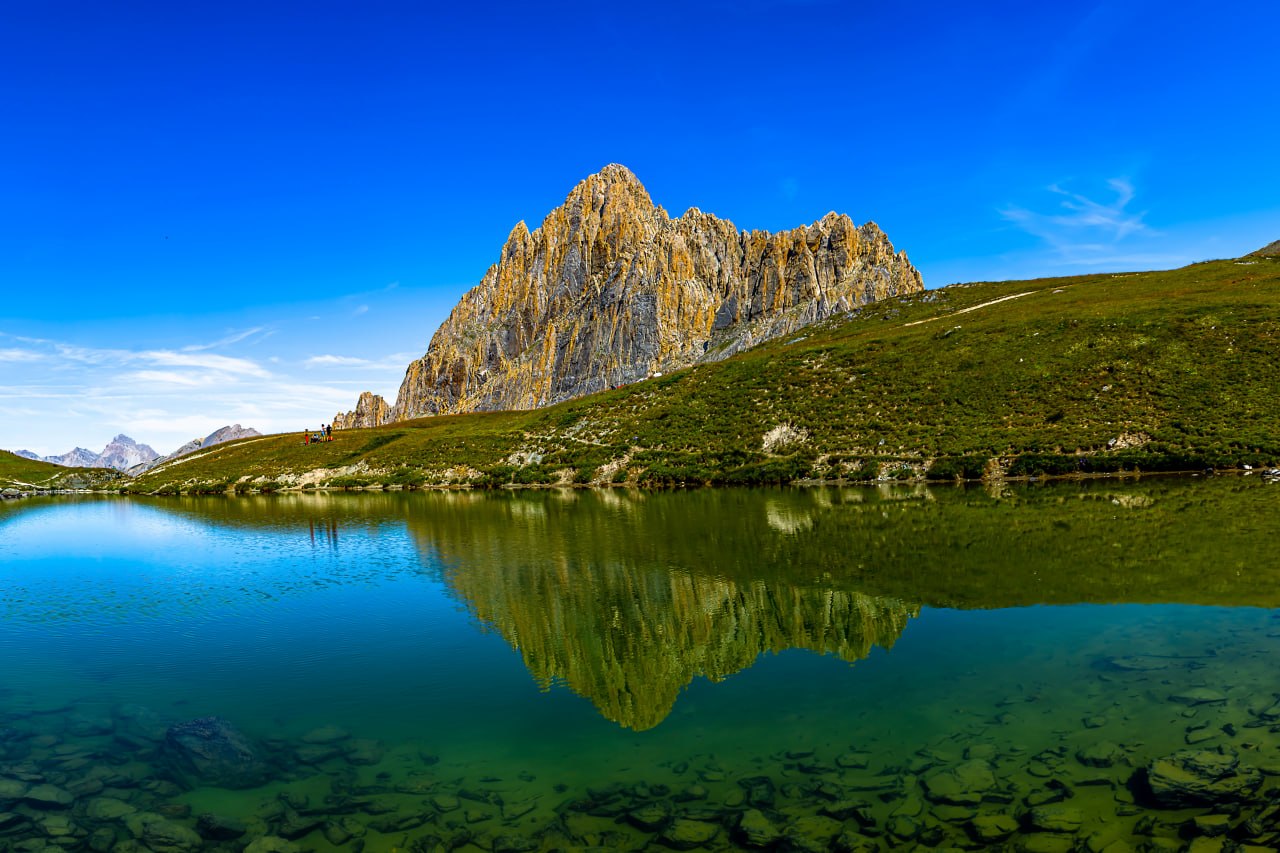
In the upper valley, towards Acceglio, the hamlet of Chiappera is dominated by the Rocca Provenzale: spires and rock walls forming some of the most spectacular Dolomite-like scenery in the western Alps. It is the valley's most photographed viewpoint.
What to see in Valle Maira: FAQ
What is there to see in Valle Maira?
The Renaissance frescoes in the parish church of Santa Maria Assunta at Elva, the 194 stone hamlets, the painted sundials, the communal ovens and mills, and the upper valley landscapes towards Chiappera and the Rocca Provenzale.
Who was Hans Clemer?
Hans Clemer, known as the "Master of Elva", was a Flemish painter active in Piedmont between the late 15th and early 16th century. His most celebrated work is the fresco cycle in the parish church of Elva, dated 1493.
What are the Elva frescoes?
A cycle of Renaissance frescoes in the presbytery and apse of the parish church of Santa Maria Assunta at Elva, attributed to Hans Clemer and dated 1493, showing scenes from the life of the Virgin and a Crucifixion.
Why is Elva called the village of the cavié?
Because until the mid-20th century many of its inhabitants collected women's hair, sold in France and across Europe to make wigs. These collectors were known as cavié.
What are the sundials of Valle Maira?
Sun clocks painted on the walls of the hamlets' houses, often with mottoes and decoration. Dozens survive across the valley, especially at Stroppo and Marmora.
Stay where the history lives
The albergo diffuso at Elva is in the very hamlet of the Hans Clemer frescoes: the valley is best seen by staying in it.