Valle Maira
One of the wildest, least changed valleys in the Western Alps: 45 kilometres of open country, stone hamlets and Occitan culture, well off the tourist trail.
A 45-kilometre valley in the heart of the Cuneo Alps
Valle Maira lies in the province of Cuneo, in Piedmont, cut by the Maira torrent that gives it its name.
It runs for about 45 kilometres, from the plain at Dronero up to the high ground above Acceglio and the French border, climbing from around 600 metres on the valley floor to peaks over 3,000 metres.
Its villages include Dronero, Villar San Costanzo, Roccabruna, San Damiano Macra, Cartignano, Macra, Celle di Macra, Elva, Stroppo, Marmora, Canosio, Prazzo and Acceglio.
It is one of the few Alpine valleys left with no major ski lifts: tourism here is a quiet business of walking, silence and landscape.
194 stone hamlets, sundials and Occitan culture
The face of Valle Maira is its hamlets: small clusters of stone and timber houses clinging to the slopes, many of them beautifully kept or restored. Dozens of painted sundials survive on their walls, left over from a time measured by the sun and the seasons.
This is Occitan country, and the lenga d'òc of the Alpine valleys is still spoken: a living culture of music, dance, festivals and place names.
In Elva people still tell the story of the cavié, the hair traders who left the valley to travel across Europe.
Elva's parish church of Santa Maria Assunta holds a celebrated cycle of Renaissance frescoes.
Woods, streams and wild country
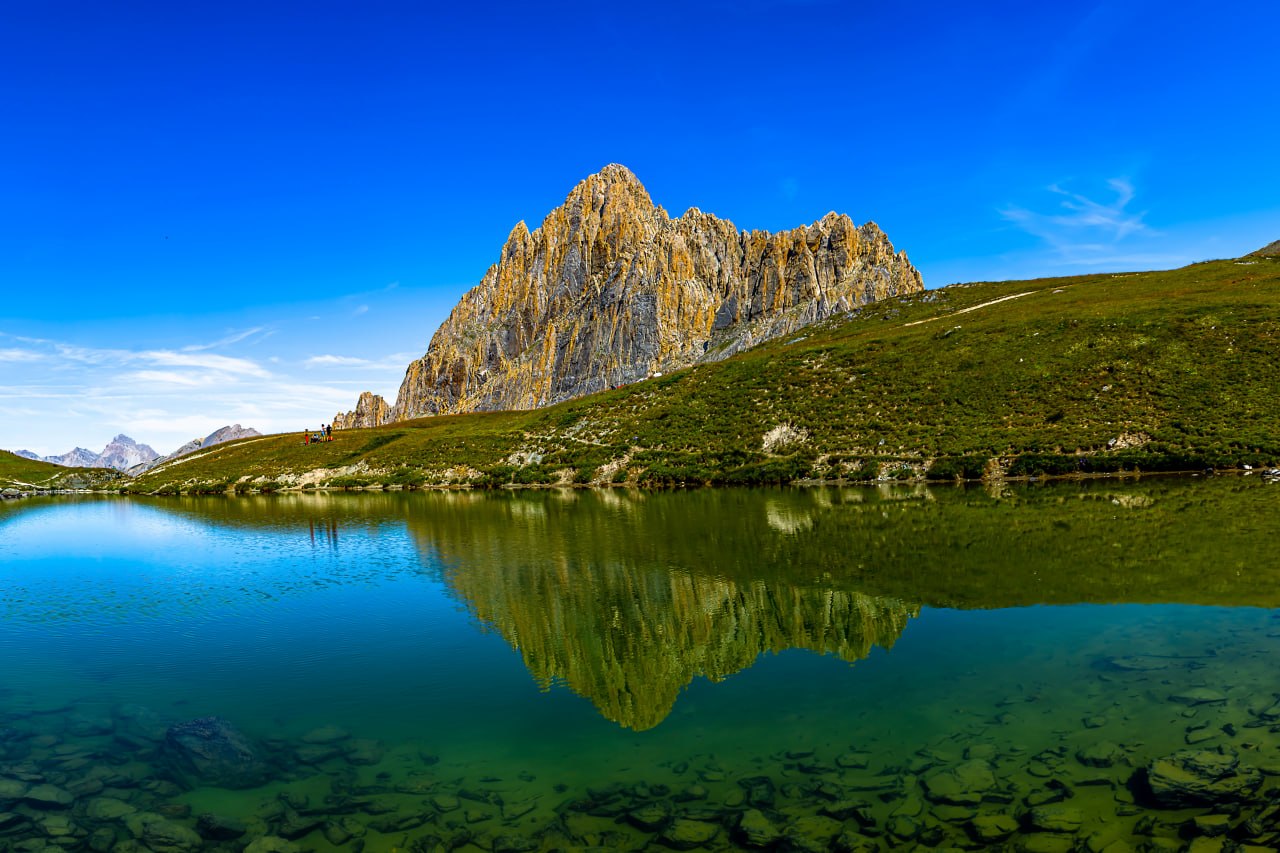
Woods of chestnut, beech and larch, high pastures, streams and mountain lakes make up a landscape that has stayed largely intact. The head of the valley, towards Chiappera and the Rocca Provenzale, throws up rock scenery worthy of the Dolomites, while the side valleys hold silence and wildlife: chamois, marmots, eagles and, increasingly, wolves.
It is a valley made for slow travel: hiking, snowshoeing, ski touring, mountain biking and easy walks between the hamlets.
Valle Maira through the year
Spring and summer are walking seasons, with the Percorsi Occitani and the Grande Traversata delle Alpi (GTA) running the length of the valley. Autumn sets the chestnut and larch woods alight — the best time for colour and for food. In winter, with none of the crowds of the big resorts, there is snowshoeing, ski touring and a great deal of silence.
To plan a trip, see where to stay and where to eat, what there is to do and the latest weather in the valley.
Come and stay in Valle Maira
An albergo diffuso among the hamlets of Elva, holiday homes at San Damiano Macra: pick whichever suits the trip you have in mind.
Valle Maira FAQ
The 13 towns of Valle Maira, from Dronero (mouth) to Acceglio (head)
| Area | Towns |
|---|---|
| Lower valley | Dronero, Villar San Costanzo, Roccabruna, Cartignano |
| Middle valley | San Damiano Macra, Macra, Celle di Macra, Elva |
| Upper valley | Stroppo, Marmora, Canosio, Prazzo, Acceglio |
Where is Valle Maira?
In the province of Cuneo, in Piedmont, in the Cottian Alps. It runs about 45 km from the plain at Dronero up to Acceglio, on the French border.
Which towns are part of Valle Maira?
From the valley mouth upwards: Dronero, Villar San Costanzo, Roccabruna, Cartignano, San Damiano Macra, Macra, Celle di Macra, Elva, Stroppo, Marmora, Canosio, Prazzo and Acceglio.
What is the Occitan culture of Valle Maira?
It is the culture of the Occitan Alpine valleys, tied to the Occitan language (lenga d'òc): a living heritage of language, music, dance, festivals and place names. It survives in the hamlets, the sundials and traditions such as the cavié of Elva.
What makes Valle Maira special?
It is one of the few Alpine valleys with no large ski resorts: 194 stone hamlets, Occitan culture, wild nature and slow tourism built on hiking, such as the Percorsi Occitani and the Grande Traversata delle Alpi.
When is the best time to visit Valle Maira?
Spring and summer for hiking; autumn for the colours of the woods; winter for snowshoeing and ski touring in silence, without the crowds of the big resorts.